In this edition of the Physics Observer, we celebrate three faculty members who were promoted to Full Professorship in Fall 25.
Neutrinos, Geometry, and the Hidden Physics of the Universe

Marilena Loverde is a theoretical cosmologist whose recent research focuses on understanding the fundamental physics of the Universe via cosmological structure and particle physics. A major thrust in her recent work is the study of neutrinos and dark radiation — nearly massless particles that pervade the cosmos and leave subtle imprints on the cosmic microwave background and the large-scale distribution of matter. Loverde’s recent work has demonstrated how cosmic datasets can be used to constrain properties of neutrinos and other light relic particles, including n
on-standard self-interactions and contributions to dark radiation, and discussed prospects for detecting the neutrino mass with cosmology.
In 2024, Loverde co-authored a paper clarifying how cosmological geometry and the growth of structure each contribute to constraints on neutrino masses from observations. This work highlights that geometric measurements (like distances and expansion history) are as essential as traditional structure suppression effects in interpreting neutrino mass limits from current surveys. Loverde’s work demonstrated that neutrino mass constraints from structure and geometry are each individually in tension with positive neutrino masses.
Loverde has also advanced theoretical modeling in the effective field theory of large-scale structure (EFTofLSS), providing semi-analytic estimates for the effective sound speed counterterm — an important ingredient in precision modeling of matter clustering against which observational data are compared.
Overall, her recent research actively bridges theoretical predictions with observational cosmology, aiming to refine models of the cosmos and extract new physics from high-precision cosmological surveys.
Probing Emergence in Quantum Matter: Strain, Symmetry, and Topology
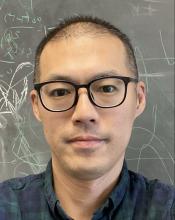
Professor Jiun-Haw Chu’s research group focuses on the principle of "emergence" in condensed matter physics—investigating how interactions among billions of electrons give rise to unexpected macroscopic phenomena. His team specializes in designing new quantum materials and probing their electronic symmetries using a unique experimental variable: tunable elastic strain. By mechanically deforming crystals in situ, the group can break symmetries on demand to reveal hidden order parameters that are invisible to standard techniques.
Over the past few years, Professor Chu’s group has made several breakthroughs in the study of topological and symmetry-broken phases. They established a rigorous protocol to identify "Ideal Weyl Semimetals," distinguishing true topological Berry curvature effects from trivial insulators in magnetic materials like MnBi2Te4. His team also pioneered the experimental study of "three-state Potts nematicity" in the van der Waals layered antiferromagnet, reporting the first thermodynamic observation of this vestigial phase using novel elastocaloric techniques.
Most recently, the group has advanced the understanding of excitonic insulators - a state formed by the condensation of neutral electron-hole pairs. In the candidate material Ta2NiSe5, they exploited the strong coupling between the excitonic order and the crystal lattice to probe the system's fluctuations. Using elastocaloric measurements to map the "excitonic susceptibility," they provided thermodynamic evidence for the condensation of these neutral bosons. This work, recently accepted as an Editor’s Suggestion in Physical Review Letters, demonstrates a novel pathway to probe and manipulate macroscopic quantum states that are electrically neutral. Looking ahead, Professor Chu will lead the "Elastic Quantum Materials" efforts within the UW MRSEC, exploring how mechanical deformation can serve as a functional control knob for next-generation information technologies.
Quantum dynamics in condensed matter, AMO, and synthetic quantum platforms

Professor Mark Rudner’s research spans a broad range of topics in quantum dynamics and many-body physics, with applications in condensed matter (solid state) and atomic/molecular systems, as well as quantum information processing platforms. Much of this work is motivated by rapidly developing experimental capabilities, which provide means to probe and to control the dynamics and properties of a wide variety of natural and synthetic materials on time and length scales that were but science fiction just a few decades ago. From a theoretical point of view, the availability of such tools motivates us to ask new types of questions, e.g., about quantum dynamics and coherence, which are now not only scientifically relevant and fundamentally important, but also crucial for enabling the development of future quantum technologies. Newly discovered topological and hybrid materials further expose a wide frontier for exploration, as well as for potential applications in classical and quantum information processing, sensing, and more.
Inspired by these developments, Mark seeks to answer: what new horizons of quantum many-body physics can be accessed by design, and/or dynamical control? What new means can we devise to enable the realization of such phenomena? How may such effects be harnessed for classical or quantum technologies? The aim of finding and stabilizing robust new types of quantum phenomena compels him and his research group to go beyond the traditional realm of equilibrium physics, bringing many new opportunities and challenges. In this light, their research aims to provide a deeper and broader theoretical view of quantum dynamics in many-body systems, and to chart out new routes for experimental investigation.